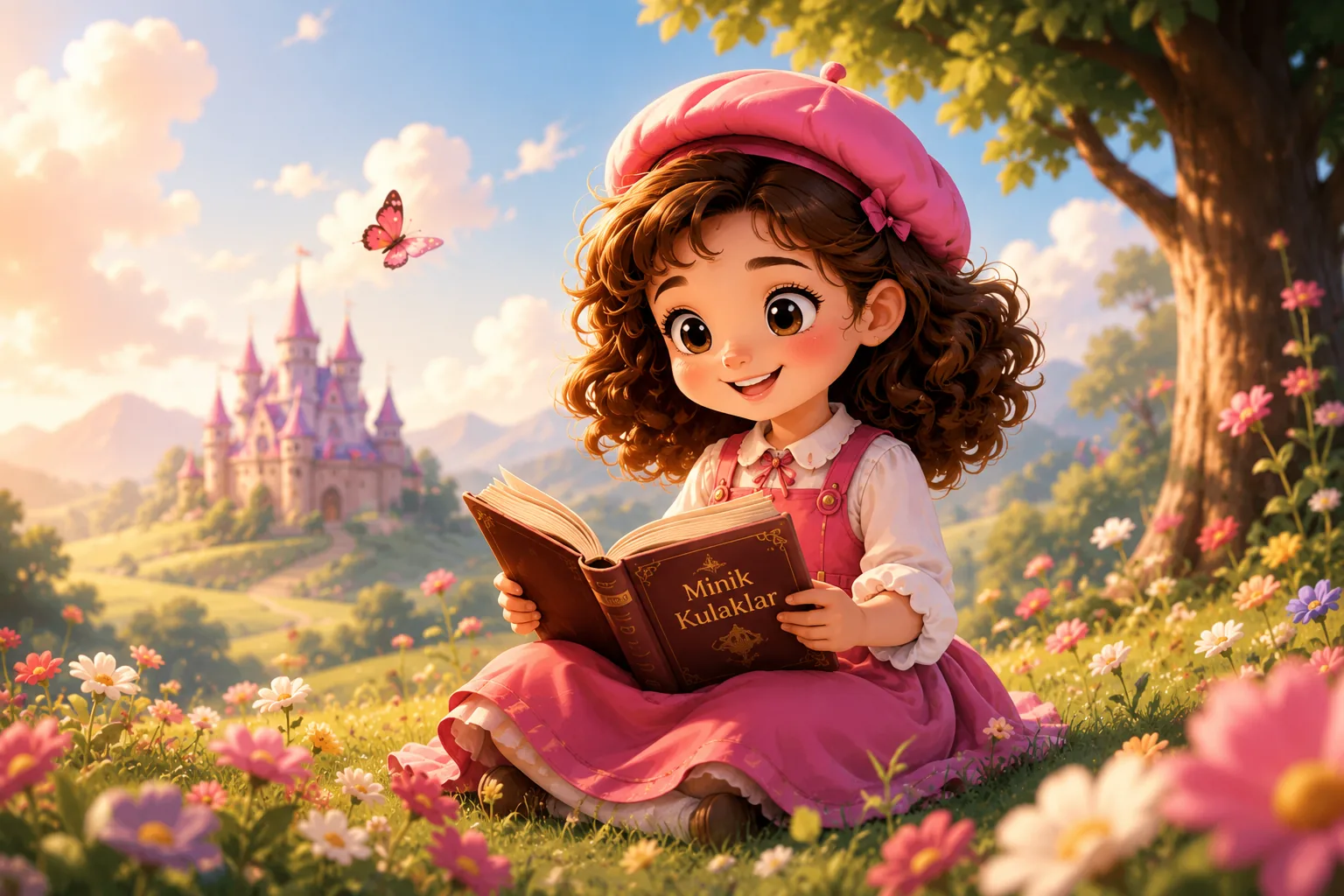
Selenga fell asleep without closing her book that night.
The book had camels in it. Deserts. A road that stretched on forever.
And in her dream, she went right there.
The Caravan City
Her feet were on sand. The sun beat down from above.
Camels lined up all around her. Dozens of them. Each one carried large bundles on its back, colorful sacks, and wooden chests.
A man walked past her. He wore a turban and held a list in his hand.
“Welcome,” Selenga said to him.
The man looked surprised. “Are you joining the caravan?”
“Just looking,” said Selenga. “Where are you headed?”
“To Samarkand. Then to Baghdad. After that, who knows where.”
What Was the Silk Road?
Selenga walked alongside the caravan.
The merchant uncle began to explain.
“This road has existed for thousands of years. It starts in China. It passes through Central Asia. Through Persia. Through Arab lands. It stretches all the way to Europe.”
“That far?” asked Selenga.
“12,000 kilometers. No single caravan travels the entire route. One group carries goods partway, then passes them to another caravan.”
Selenga looked at the road ahead. Dust clouds. Sand dunes. In the distance, the minarets of a city.
“What are you carrying?”
The merchant opened one of the chests. Silk. Red, green, yellow. It shimmered in the light.
"This comes from China. They make it there. In our lands, it's incredibly valuable."
The Spices
Another camel's load was opened.
Selenga breathed in deeply.
Cinnamon. Black pepper. Ginger. Saffron.
“I know these smells,” said Selenga. “We have them in our kitchen.”
“The Silk Road brought them to you,” said the merchant. “Have you ever wondered how they got to your kitchen?”
Selenga had never thought about it.
“Pepper from India, saffron from Persia, cinnamon from China — they all traveled this road.”
Samarkand
The caravan entered a city.
Selenga looked around. Her eyes grew wide.
Marketplaces everywhere. Voices all around. Carpets hanging. Glass decorations. Books. So many books.
“Where are we?” she asked.
“Samarkand. One of the most important cities on the Silk Road. Turks, Arabs, Chinese, Indians, Persians — they all meet here.”
A child ran up to her. In his hand was a small glass bottle.
“This is perfume,” said the boy. “Made from flowers. It came from very far away.”
Selenga took it and smelled it.
It was rose. And something else. She couldn't describe it, but it was beautiful.
The Books
Selenga stopped in front of a shop.
Inside were books. But they were different. Colorful. Large letters. Some were written from right to left.
“What are these?” she asked.
“Maps. Stories. Mathematics books. Medical texts.”
“Did the Silk Road carry these too?”
"The Silk Road didn't just carry goods,“ said the merchant. ”It carried ideas. It carried science. It carried languages. It carried religions. It carried music."
Selenga sat down on a stone. She thought about this.
“Without this road, the world would be so different.”
“Very different,” agreed the merchant. “Maybe we would never have known each other at all.”
Waking Up
Selenga woke up.
She went to the kitchen. There was cinnamon tea on the table.
She looked at her mother. “Where does this cinnamon come from?”
Her mother looked confused. “From the store.”
“Before that?”
"I don't know. From somewhere far away."
Selenga smiled. "It comes from the Silk Road. It's been coming for thousands of years."
Her mother's mouth fell open.
What Did We Learn From This Story?
1. The Silk Road was a vast trade network that opened around 130 BCE and connected the world for centuries. 2. It didn't just carry goods — science, art, religion, and language spread along this route. 3. Cities like Samarkand, Bukhara, and Baghdad became centers of world culture because of this trade route. 4. Many things in our kitchens and homes — spices, glass, silk — came through this ancient path. 5. When different civilizations traded together, it made the world richer and more connected.
Questions to Discuss as a Family
1. What foods in your kitchen might come from far-away countries? 2. How do you think the world would be different without the Silk Road? 3. If you were a merchant on the Silk Road, what would you trade?